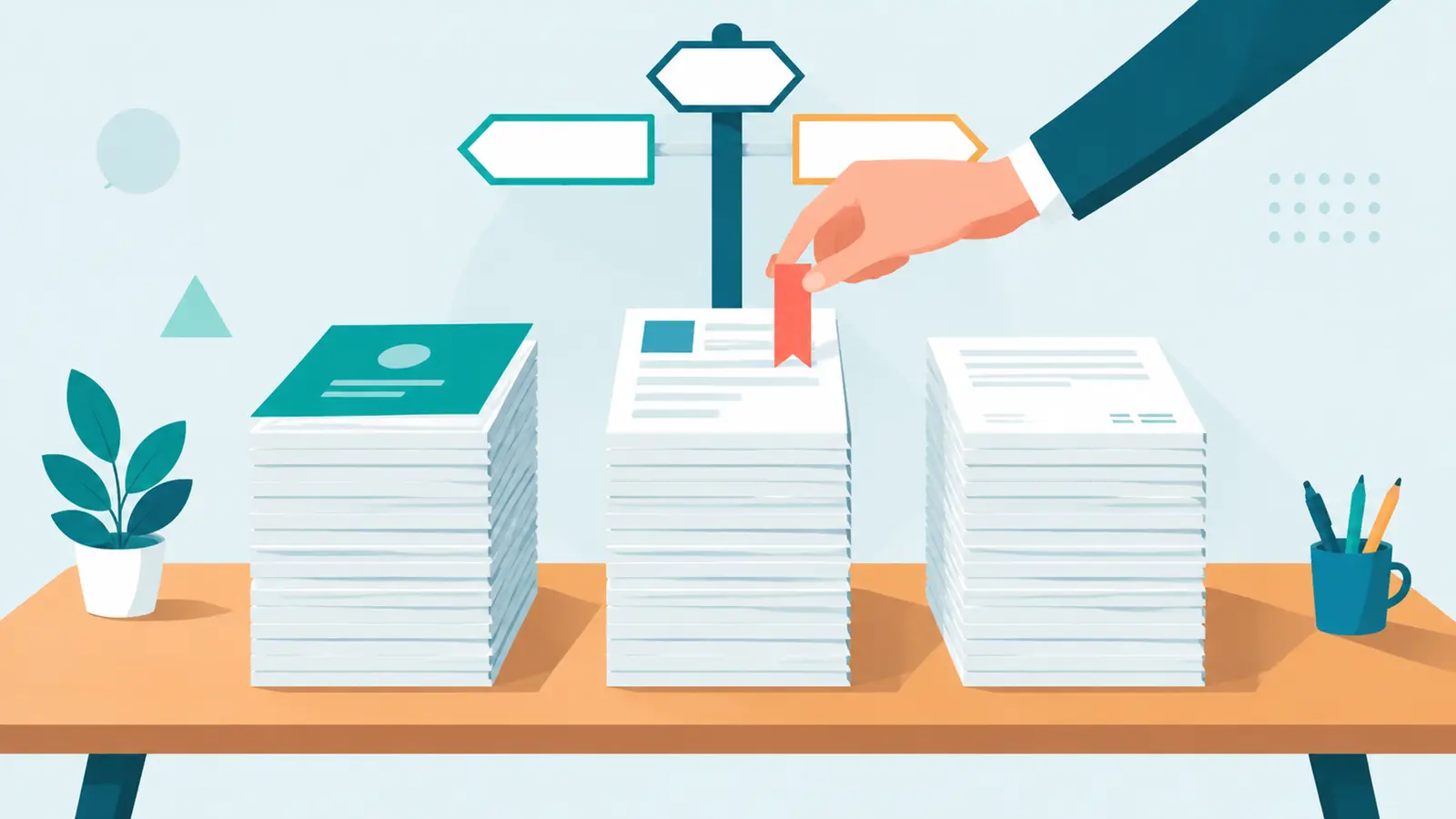
Use APA for psychology, education, nursing, business and most social sciences; MLA for English, literature, languages and much of the humanities; and Chicago for history and some arts and humanities subjects. The biggest difference is in-text citation: APA uses author and year (Lee, 2021, p. 4), MLA uses author and page (Lee 4), and Chicago's notes-bibliography system uses numbered footnotes. If your instructor names a style, use theirs; this guide is for everything else.
Examples use fictional sources. Formats follow APA 7th edition and MLA 9th edition; for Chicago, we describe the notes-bibliography system without tying it to one edition.
Which style does your subject use?
Citation styles grew out of what different fields care about. Sciences and social sciences care when research was done, so APA puts the year up front. Literature scholars quote texts closely, so MLA points straight to the page. Historians often comment on their sources as they go, so Chicago gives them footnotes.
| Field | Usual style |
|---|---|
| Psychology, sociology, education, nursing, social work | APA |
| Business, communications, criminal justice | APA (often) |
| English, literature, creative writing, modern languages | MLA |
| Film, cultural studies, some philosophy courses | MLA or Chicago |
| History, art history, classics, religious studies | Chicago (notes-bibliography) |
| Some sciences and social sciences | Chicago author-date |
These are tendencies, not rules. Departments and journals set their own requirements, and some fields use other styles entirely, such as IEEE in engineering or AMA in medicine. Your syllabus or assignment sheet is the final word.
The main differences at a glance
| Feature | APA 7 | MLA 9 | Chicago (notes-bibliography) |
|---|---|---|---|
| In-text citation | (Lee, 2021, p. 4) | (Lee 4) | Superscript note number¹ |
| Source list title | References | Works Cited | Bibliography |
| Title page | Yes, for student papers | No, a heading on page 1 | Usually, for student papers |
| Date in the entry | Right after the author | Near the end | Near the end |
| Author names | Surname, initials | Surname, full first name | Full name; surname first in bibliography |
| Article and book titles | Sentence case | Title case | Title case |
| Page header | Page number only (student) | Last name and page number | Page number |
All three use double spacing, 1-inch margins and hanging indents in the source list.
APA in practice
APA is built around the date. Every in-text citation includes the year, and the reference list entry puts it right after the author:
Lee, D. (2021). Rivers and cities: A short history of urban water. Fieldstone Press.
(Lee, 2021, p. 4)
Student papers in APA 7 have a title page with the paper title, your name, affiliation, course, instructor and due date, and no running head. The full walkthrough is in how to write a paper in APA format.
MLA in practice
MLA keeps in-text citations as short as possible, usually the author's surname and a page number with no comma between them. The works-cited entry is built from "core elements": author, title, container, other contributors, version, number, publisher, date and location.
Lee, Dana. Rivers and Cities: A Short History of Urban Water. Fieldstone Press, 2021.
(Lee 4)
MLA papers don't need a title page unless your instructor asks. Instead, your name, instructor, course and date go at the top left of the first page. See MLA format for setup.
Chicago in practice
Chicago has two systems. Notes-bibliography puts citations in numbered footnotes or endnotes and lists sources in a bibliography. Author-date looks a lot like APA, with (Lee 2021, 4) in the text and a reference list. When people say "Chicago style" in history or the humanities, they usually mean notes-bibliography.
Footnote:
- Dana Lee, Rivers and Cities: A Short History of Urban Water (Fieldstone Press, 2021), 4.
Bibliography:
Lee, Dana. Rivers and Cities: A Short History of Urban Water. Fieldstone Press, 2021.
Notes can also hold comments that don't fit the main text, which is one reason historians like them. See how to do footnotes for numbering, shortened notes and the steps in Word and Google Docs.
Citation GeneratorAPA, MLA, Chicago and moreHow to choose when nobody tells you
- Check the assignment sheet, syllabus and course site. Many instructors state the style once at the start of the term.
- Ask. A one-line email is faster than reformatting a whole bibliography.
- Look at what your field publishes. Open two or three journals in your subject and see how they cite.
- Pick one and stay consistent. A consistent, correctly formatted paper in the "wrong" style is easier to fix than a mix of styles.
Citation guides by source type
Each guide below covers the formats for that source, with fictional examples:
Common sources
- How to cite a website: single pages, no author, no date, whole sites
- How to cite a book: editions, chapters in edited books, e-books
- How to cite a journal article: DOIs, volume and issue, page ranges
- How to cite a PDF: reports, fact sheets and other documents
- How to cite poems: line numbers, anthologies and quoting verse
Media, class materials and conversations
- How to cite a YouTube video: uploader, timestamps
- How to cite a lecture: live lectures, slides and recordings
- How to cite a PowerPoint: slide decks and course materials
- How to cite an interview, image or social media post
AI tools
In-text citations and notes
- In-text citations with no author
- Including a page number in a citation
- How to quote a quote: citing a source quoted in another source
- Common in-text citation errors
- How to do footnotes
Formatting the whole paper
- How to write a paper in APA format
- MLA format: setting up your paper
- How to write an annotated bibliography
Mistakes that come from mixing styles
Students who switch between courses often blend styles without noticing. Watch for these:
- A comma in an MLA in-text citation, as in (Lee, 4). MLA has no comma there; APA does.
- "p." in MLA. MLA writes the bare number: (Lee 4).
- Title case in an APA reference list. APA uses sentence case for article and book titles.
- A "Works Cited" page in an APA paper, or "References" in an MLA one.
- The year missing from APA in-text citations. APA always needs the year.
A citation generator can format the details you give it, but it can't tell which source you actually used or whether the metadata it found is right. Check every field against the source itself.
Key takeaways
- APA: author-date, References, title page; common in social sciences, education, nursing and business.
- MLA: author-page, Works Cited, no title page; common in English, literature and languages.
- Chicago: footnotes plus a bibliography (or author-date); common in history and some arts.
- Your instructor's requirements beat any general rule, and consistency matters more than the style you pick.