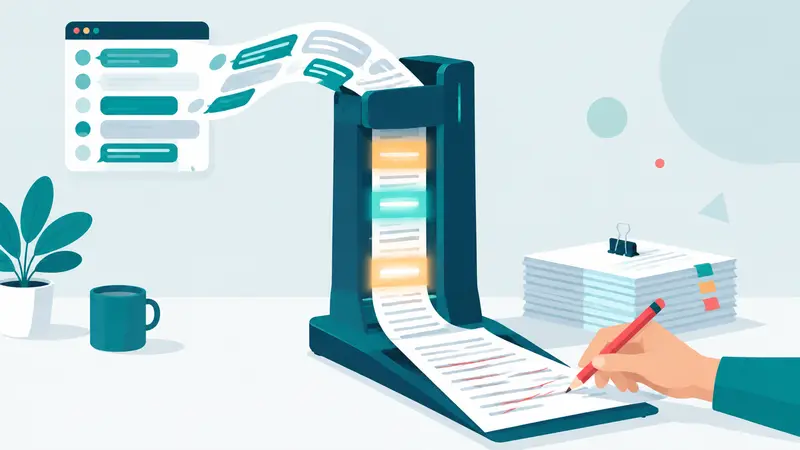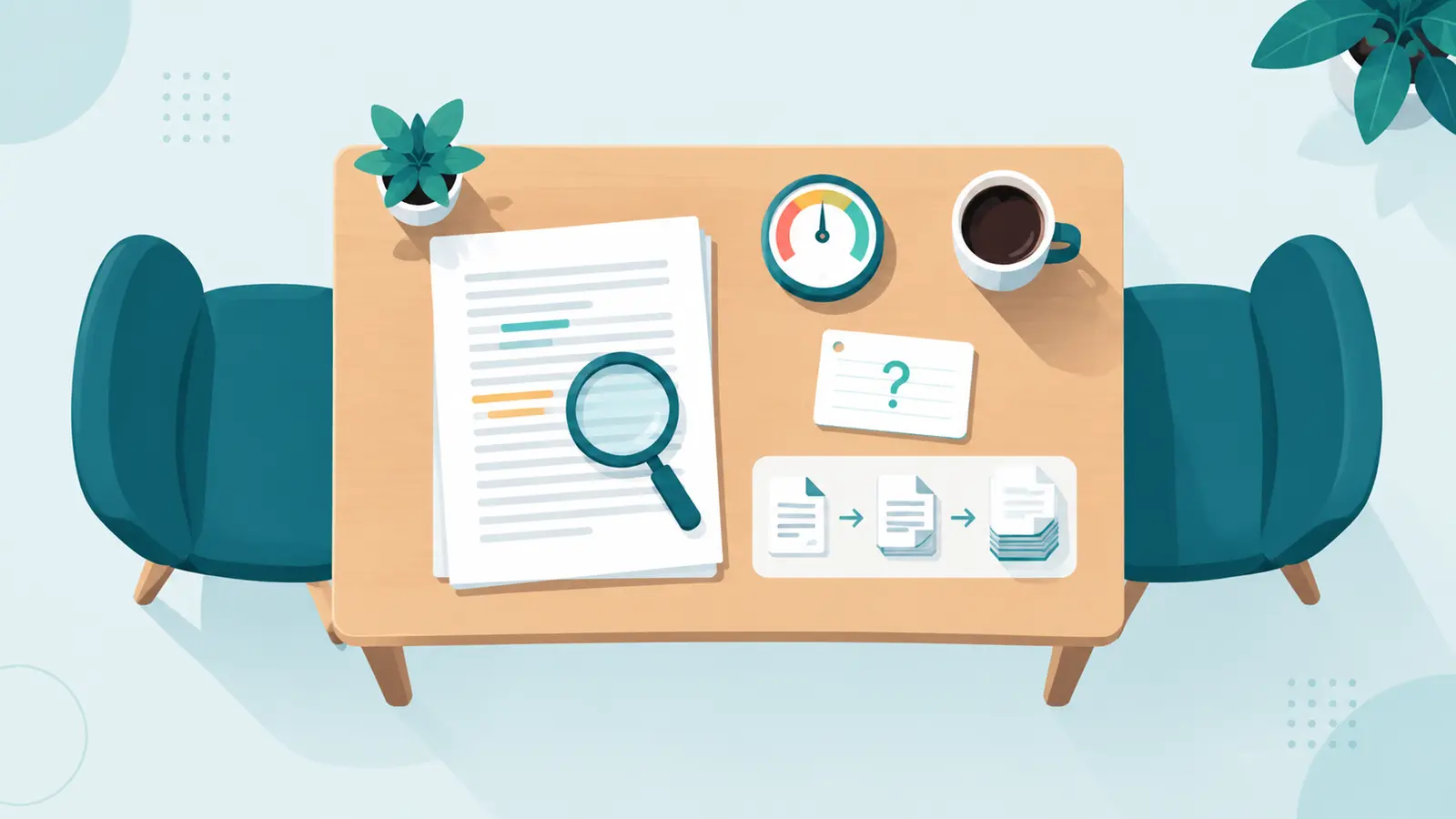
Yes, professors can often tell when a student relied on ChatGPT, but rarely from a single tool. Most look at several things together: an AI detector report if their school uses one, how the writing compares with your earlier work, whether the citations are real, and whether you can explain your own argument. A detector score by itself isn't proof, and careful instructors treat it as a reason to look closer, not a conclusion.
This article explains what instructors actually look at, so you understand the process. It isn't a guide to hiding AI use. If you're allowed to use AI, disclose it. If you aren't, the reliable way through is doing the work yourself.
The short answer: it's a judgment, not a scan
There's no button that reveals whether ChatGPT wrote an essay. Detection tools estimate how closely text matches patterns common in AI output, and they can be wrong in both directions. That's why most academic integrity processes ask for more than a score before anyone draws conclusions.
What professors have, and what software doesn't, is context. They've read your earlier work, they know what was taught, and they can ask you questions. Those signals often matter more than any percentage.
1. AI detector reports
Many colleges license Turnitin, which includes an AI writing indicator alongside its similarity report. Some instructors use other tools, such as GPTZero or Copyleaks.
A detector report usually shows an overall estimate and highlights passages that look machine-like. Instructors who use these tools well read the highlighted passages themselves and ask whether they fit everything else they know.
What a detector report can't do:
- Prove authorship. It measures patterns in text, not who typed it.
- Avoid false positives entirely. Short, formulaic, or second-language writing can be flagged even when a person wrote every word. Our article on how accurate AI detectors are explains why.
- Know the policy. A course that allows AI brainstorming and one that bans AI may both produce text a detector flags.
Many schools and detector makers say the same thing publicly: don't use a score as the only evidence.
Note
2. Writing history and process
Process evidence is one of the strongest signals an instructor can have.
- Version history. Google Docs and Microsoft Word keep revision history. A document that grew over several sessions, with deletions and rewrites, looks very different from one that appeared in a single paste.
- Writing-process tools. Some platforms record how a document was written, such as typing versus pasting. Some courses require these tools; others don't use them.
- Staged assignments. Proposals, outlines, annotated bibliographies, and rough drafts let instructors watch your thinking develop.
If your school asks you to write in a tool that keeps history, that history can also protect you. It's your best evidence if a detector gets it wrong.
3. Changes in voice and level
Instructors read a lot of student writing, and they notice when something doesn't match.
Common things that stand out:
- A sudden shift in vocabulary or polish compared with your in-class writing or earlier essays.
- Smooth, general paragraphs that never quite commit to an argument.
- A tone that doesn't fit the assignment, like a formal summary where a personal reflection was asked for.
- Missing course specifics: no reference to the readings, lectures, or examples discussed in class.
- Even, repetitive structure, where every paragraph has the same shape and length.
None of these prove anything alone. Students improve, get help from writing centers, and have good weeks. But a combination of signals tends to prompt a conversation.
4. Fabricated or mismatched citations
This is one of the clearest giveaways, and it has nothing to do with detectors.
Chatbots can produce references that look real but don't exist, or attach real authors to papers they never wrote. They can also summarize a real source inaccurately. An instructor who checks a few references and finds that one can't be located, or that a quoted page says something different, has a concrete problem to raise.
Quotes with page numbers that don't match, sources the library can't find, and statistics with no traceable origin all draw attention. Checking every source you cite is simply good practice. If you used AI to find leads, read and cite the originals yourself.
5. Follow-up conversations and oral checks
When something seems off, many instructors simply ask. They might request a short meeting and ask you to:
- explain your thesis in your own words,
- walk through how you found and chose your sources,
- define a term you used,
- describe what you'd change with more time.
Someone who wrote the essay can usually do this comfortably, even if they're nervous. Some instructors also add in-class writing, presentations, or oral exams to their courses, partly to see students' thinking directly.
What professors generally can't see
It's worth being clear about the limits too:
- They can't see your private chatbot history.
- A detector can't tell which tool, if any, you used.
- A low score doesn't confirm a person wrote something, and a high score doesn't confirm a machine did.
- They don't know your process unless you show it or the course tools record it.
That's exactly why process evidence and honest conversation carry so much weight.
AI DetectorSentence-level AI scoreIf your own work is flagged
False positives happen, and being questioned about work you wrote is stressful. A few steps help:
- Ask what raised the concern. A specific passage, a citation, or a score?
- Gather your evidence. Drafts, version history, outlines, research notes, browser bookmarks, library records.
- Offer to explain your work. Walk through your argument and sources.
- Know your school's process. Most have defined steps and a way to respond or appeal.
Our guides on how to prove you did not use AI and why your writing may be detected as AI go into detail.
If AI use is allowed in your course
Many courses permit some AI use, such as brainstorming or grammar feedback. In that case:
- Stay within what the policy allows for each assignment.
- Disclose how you used AI, clearly and specifically. See how to disclose AI use in an assignment for sample statements.
- Keep your prompts and drafts.
- Verify every fact and source the tool gives you.
Disclosed, permitted use isn't something to hide from a detector. It's part of the record.
Key takeaways
- Professors usually spot ChatGPT use through several signals together, not a single tool.
- Detector reports are one signal; they can be wrong and aren't proof on their own.
- Version history, staged drafts, voice consistency, real citations, and follow-up conversations matter as much or more.
- Fabricated or misattributed sources are a common, concrete red flag.
- If you're allowed to use AI, disclose it. If you're flagged for work you wrote, show your process calmly.